Explore how IT project management can hinder small teams. Discover alternatives that enhance efficiency without the added costs of a project manager.

November 5, 2026
Hiring a dedicated project manager can actually slow down IT projects for most small and midsize businesses. The added coordination often creates more overhead than the complexity of the environment requires.
A project manager's job is to centralize information and decisions that would otherwise move directly between people. In a five-person IT team, those decisions already move directly, person to person, without needing a funnel. Route them through a funnel anyway, and you have added a step, not removed one.
That step shows up first in the approval process. A change that once took a quick conversation between two people now waits for a status update, a sign-off, a slot in someone else's schedule. Each of those waits multiplies across every task running at once, and a workflow that used to flex in real time starts to feel rigid.
Many businesses in Connecticut run exactly this kind of lean operation, which is why the appeal of bringing in a project manager and the risk it carries sit so close together. Hiring someone to organize tasks, track progress, and keep everyone pointed at the same goal sounds like an obvious fix for a disorganized project. For small and midsize businesses, though, the coordination that role is built to provide can end up working against the team it was meant to help.
Seeing exactly where that mismatch comes from makes it easier to decide how to manage IT projects without introducing a problem you didn't have before.

The logic behind hiring a project manager assumes a gap that needs filling: someone to take charge, track the details, keep people aligned. In a smaller organization, that gap often doesn't exist yet, so the role lands on top of a system that was already working.
Small teams communicate directly by default. Layer a project manager over that, and the direct line gets rerouted through extra meetings, extra status updates, and explanations of tasks the team already understood without them. What was meant to help ends up generating delay and friction instead.
Picture an IT team of a handful of people who already know what needs doing and who owns each piece of it. Introduce a new coordinator into that setup, and suddenly the same information gets repeated, approvals get queued, and a formal process gets imposed on a workflow that never needed one.
The mismatch is sharpest when the project itself is simple or when the user base sits in the 25 to 150 range. That scale calls for nowhere near the coordination that large, multi-team projects require, so the added layer has no real work to do.
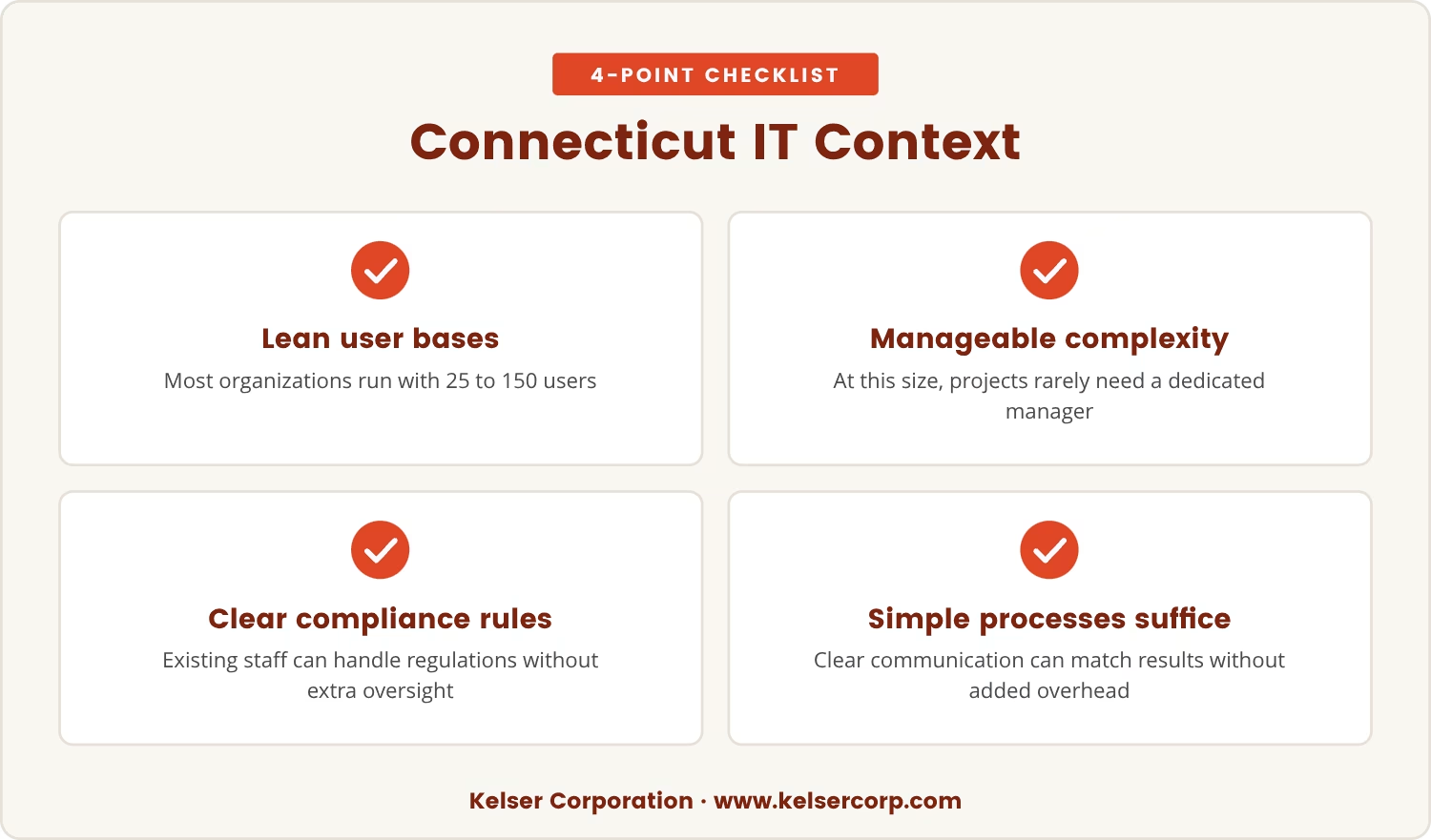
Beyond the mismatch in scale sits a second problem: cost, and not just the salary line. A new role brings onboarding time, training time, and the work of reshaping existing processes to fit a management style the team didn't have before.
Those adjustments tend to surface in the budget in unexpected places. Managed IT services costs can climb not only because of the new hire but because each additional approval step adds time to every task, which drags on IT operations management as a whole.
For small and midsize businesses, that accumulation of small costs can outweigh whatever efficiency the role was supposed to deliver. Rather than speeding projects up, the organization ends up spending more time and money just to keep them moving at the old pace.
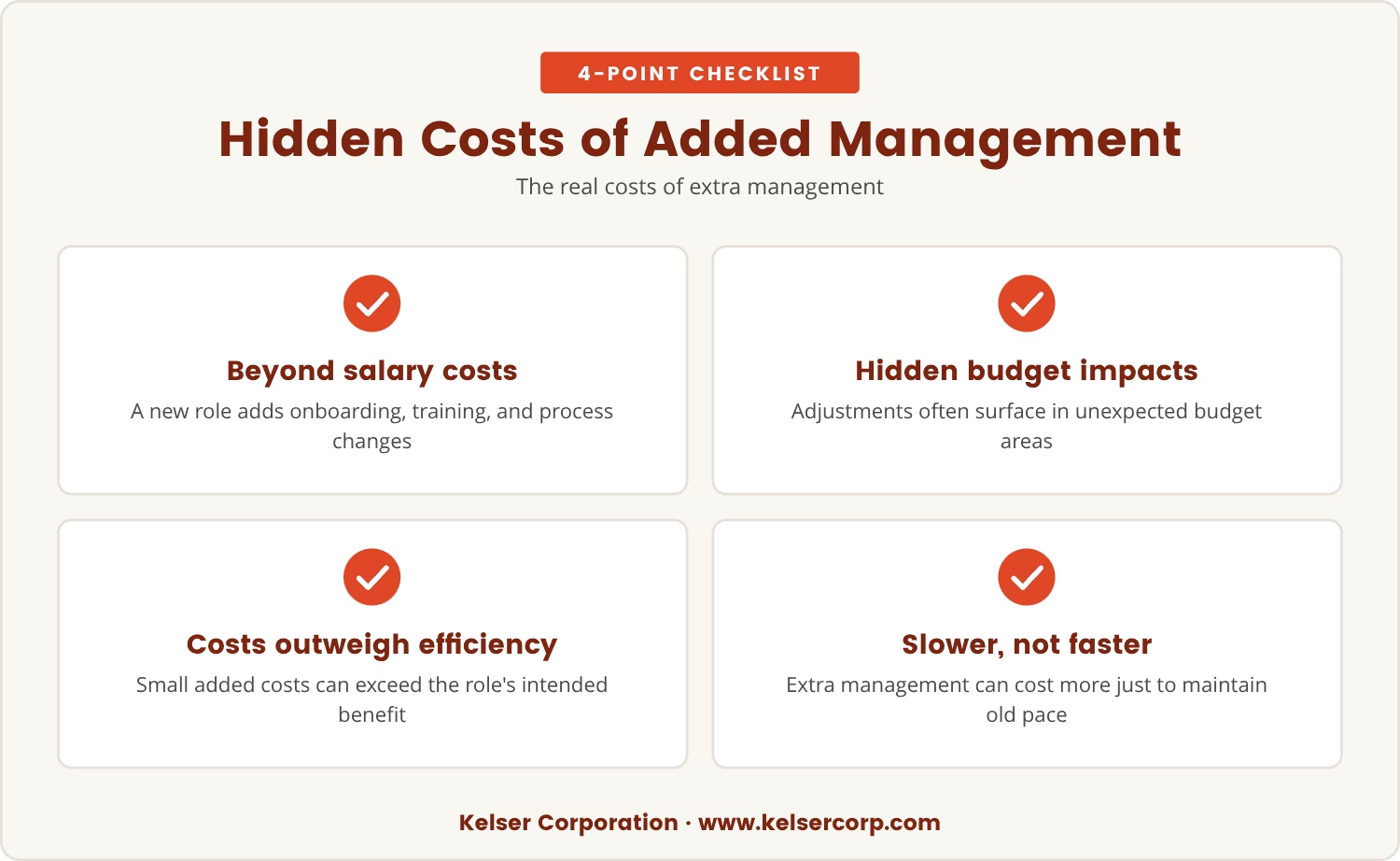
Cost and scale both play out differently depending on where a business sits, and Connecticut's business landscape is a useful case in point. Most organizations here run lean, with the majority falling between 25 and 150 users and the heaviest concentration in the 25–70 range. At that size, IT project complexity is usually manageable without a dedicated project manager.
Local regulatory conditions reinforce this. Compliance requirements in the state are often clear enough that existing staff can manage projects around them without needing extra oversight layered on top.
Put the local user-base patterns together with that regulatory clarity, and hiring a project manager stops looking like the automatic right answer. Clear communication and simple processes often get the same result with none of the added overhead.
That overhead shows up in specific, recognizable ways once a project manager joins a small IT initiative. The patterns below are the most common ones.
Regular check-ins and status updates are a project manager's standard toolkit, but each one pulls time away from the actual work it's meant to track.
Reports and paperwork pile up fastest on teams that are already stretched thin, turning record-keeping into its own burden.
Tasks that once moved on a quick verbal go-ahead now wait on formal approval or feedback, and that wait is pure added time.
A project manager typically works from a set methodology, and that structure can make it harder to pivot when something unexpected comes up.
Without clearly defined roles, team members end up duplicating each other's work or idling while they wait for instructions they didn't actually need.
Insert a middle layer between people who used to talk directly, and the gaps that open up tend to produce misunderstandings and missed details.
Given all of that, the throughline for smaller organizations is simplicity rather than added structure. The following practices tend to deliver results without introducing a new layer of coordination:
Simplicity is a principle; putting it into practice means looking at concrete alternatives to a full-time hire. The place to start is the current workflow itself: where do tasks stall, and where does communication break down? Often a shared project board or a short daily check-in closes that gap without adding headcount.
Training existing staff in basic project management skills is another route, spreading responsibility across the team rather than creating a new role for it. A team lead or technical expert can frequently handle coordination for a smaller initiative without any title change at all.
When a project genuinely outgrows that approach, temporary outside help offers a way to scale up for the duration of the work, without committing to a permanent position once it wraps.
Put all of this together, and the assumption that growth automatically calls for a project manager starts to look shaky, especially for small and midsize organizations in Connecticut. The added coordination can slow IT initiatives down, raise costs, and generate frustration when the complexity of the solution outpaces the complexity of the problem.
The alternative is to keep goals clear, communication open, and processes flexible enough to match the team's actual size. Right-sizing the approach is what keeps projects moving without the extra overhead.

Many businesses in the 25 to 150 user range find themselves wondering if a dedicated project manager is the right fit for their IT projects. At Kelser Corporation, we see that most teams in this size group benefit from simpler, more direct ways of managing projects.
If you’re curious how our approach could help your business—or want to talk through your own setup—let’s start a conversation.
We’ll match your current IT costs and give you 10% off your first year if you qualify—making it easier to see if a change is right for you.
Set clear project goals and break tasks into manageable steps, then track progress with simple tools like shared calendars or task lists. Open communication among team members, so everyone knows their responsibilities and deadlines, keeps projects on track without adding a new layer of management.
Look for software that is easy to use and doesn't demand extensive training, such as Trello, Asana, or Microsoft Planner, all of which offer straightforward task and deadline tracking. Pick the platform that matches the team's existing workflow rather than one that adds unnecessary complexity.
A dedicated project manager earns its place when projects grow large, span multiple departments, or require specialized coordination that no one on the team currently owns. For a smaller team, the better question is whether the added structure will solve an actual problem or simply add more steps.
Success depends more on clear communication, defined goals, and a team that understands its roles than on formal credentials. Certification helps on large or complex projects, but a small team can get strong results from practical skills, regular check-ins, and honest feedback that keeps everyone aligned.
A roadmap is a visual plan laying out the key steps, milestones, and deadlines so everyone can see how the pieces fit together and what comes next. A small IT project benefits from having one, but it should stay simple and clear rather than growing into its own project.