


Discover how IT infrastructure consulting can transform your business. A thorough assessment reveals hidden issues.

October 9, 2026
Switching to a managed service provider changes how a company plans for growth by turning unpredictable IT spending into a budgeting advantage. Treating it as just a support decision means missing out on this strategic benefit.
Picture two invoices landing on a CFO's desk in the same quarter: one is a routine monthly line item, the other is an emergency server replacement nobody budgeted for. Only one of those lets a business plan its next move with confidence.
That gap points to something easy to miss when a company first considers a managed service provider: the real shift isn't in how technical support gets handled, it's in how growth gets planned and paid for.
Once IT spending stops arriving as a surprise, a finance team gains a level of control over technology costs that reactive support never allowed. A managed service provider, or MSP, is a third-party company that takes over IT systems for a predictable monthly fee, and that predictability is precisely why many businesses in Connecticut rely on one instead of hiring and training an in-house IT staff.
Because the fee is fixed rather than reactive, planning for the future replaces scrambling to cover the next unexpected repair. That's what makes the budgeting shift worth understanding in its own right, alongside whatever support terms come with it.

Running a business means absorbing the occasional unplanned expense, but IT is one area where those costs can spiral fast if nothing keeps them in check.
Traditional in-house IT tends to produce exactly that kind of spending pattern. Hardware failures, emergency fixes, and sudden upgrades all land on the budget without warning, which makes it difficult to invest in new projects or plan growth with any real confidence.
A managed IT services model breaks that pattern. A set monthly fee replaces the surprise expense, which means IT costs can be forecast and folded directly into growth plans rather than treated as a wildcard. Scaling the business becomes the focus, since the technology spending underneath it is already accounted for.
The payoff isn't just a steadier budget. It's fewer last-minute spending decisions made under pressure, and more room to commit to bigger plans with confidence.
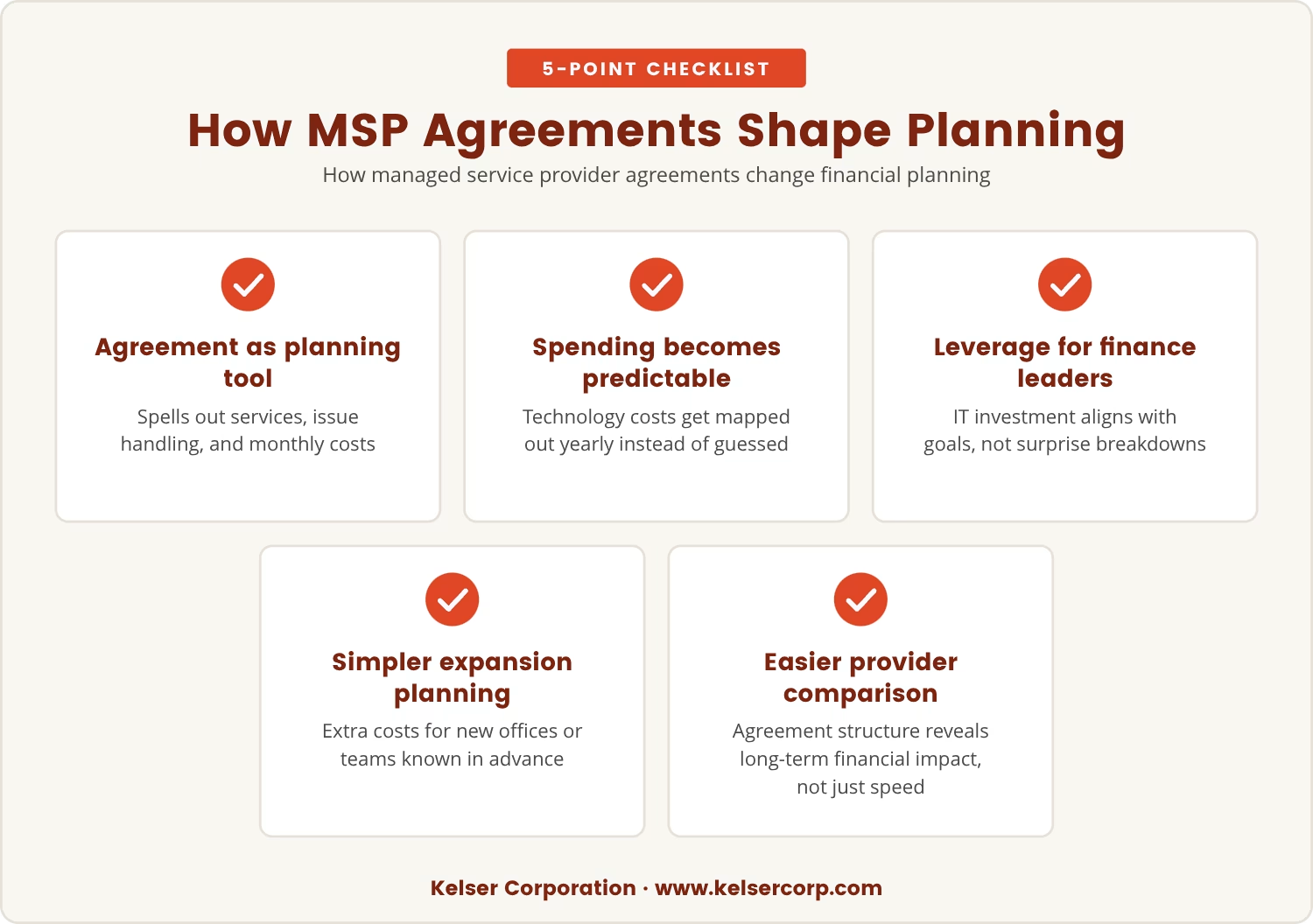
A managed service provider agreement does more than spell out support terms; it functions as a planning tool for the months ahead.
Most MSP agreements lay out exactly what services are covered, how issues get handled, and what the monthly cost will be. That clarity turns technology spending into something mapped out for the year rather than guessed at every time something might break.
For finance leaders, that clarity translates into leverage: IT investment can be aligned with business goals instead of dictated by whatever breaks first. Planning to open a new office or expand a team becomes simpler, too, since the extra costs an MSP will charge are known in advance rather than discovered after the fact.
That same clarity also makes providers easier to compare. Support response times stop being the only variable, because the shape of each agreement itself reveals how it will affect long-term financial health.
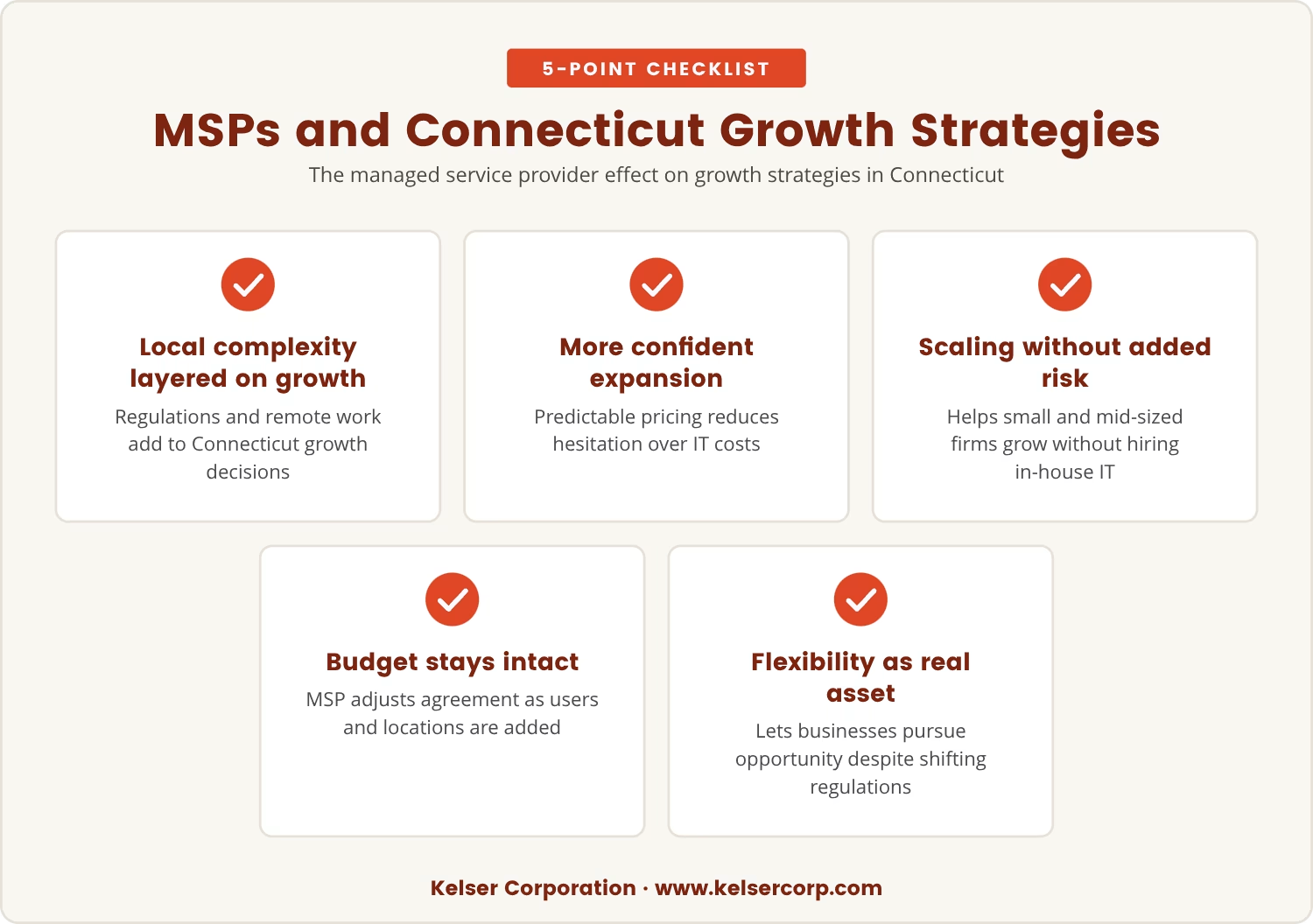
Connecticut businesses run into their own version of this challenge, layering local regulations and the demands of remote work and compliance on top of everyday growth decisions.
A managed service provider changes how that growth gets approached. Rather than delaying expansion out of concern over IT costs, a business can move forward with more confidence, since the provider's predictable pricing model spells out what to expect as the team grows or needs shift.
That predictability matters most for small and mid-sized companies looking to scale without absorbing the risk of hiring additional in-house IT staff. Users and locations can be added while the MSP adjusts the agreement and cost to match, keeping the budget intact even as the business changes shape.
Given how quickly regulations and business needs can shift in Connecticut, that flexibility becomes a real asset: new opportunities can be pursued without technology worries holding the decision back.
Not every MSP agreement is built the same way, and the fine print determines whether the budget actually supports the growth plan or quietly works against it.
A well-structured agreement built around these points is what makes it possible to plan for growth without worrying that IT spending will spring a surprise later.
Moving from an in-house IT team to an outsourced provider changes more than who picks up the support line; it reshapes how the budget itself gets built.
In-house IT carries built-in unpredictability, since salaries, benefits, training, and emergency repairs all stack up in ways that make monthly costs hard to pin down. Outsourcing to an MSP collapses all of that into a single, predictable monthly payment.
With that single payment in place, attention shifts from managing emergencies to planning ahead. Resources can be set aside for growth projects while basic IT needs stay covered, and technology investments become easier to justify to leadership once the costs are clear and consistent rather than scattered and unpredictable.
Anyone who has had to explain a sudden IT expense to a finance team already understands exactly how valuable that predictability is.
Once IT spending becomes predictable, the effects reach well past the budget spreadsheet and into how the business actually runs day to day.
Teams move faster because decisions no longer risk being derailed by unexpected technology costs, and leaders approve new projects with more confidence once they can see exactly how IT fits into the larger financial picture.
That same stability builds trust internally. When employees notice that technology runs smoothly and issues get resolved quickly, their attention shifts back to core work instead of lingering on downtime.
Over time, the result is an organization that moves with more agility: new opportunities get pursued, market shifts get absorbed, and progress continues without IT surprises pulling the brakes.
Choosing the right managed service provider comes down to more than comparing price tags or support hours; the right questions surface a partner actually built to support growth goals.
Look past basic support toward proactive maintenance, cybersecurity, and disaster recovery, since these extras are often what determine whether growth happens without disruption.
Ask how the agreement adapts when users, locations, or new technology get added, since a flexible provider is what makes smooth scaling possible.
Regular reviews keep the contract aligned with a changing business, so it's worth asking how often those check-ins happen and what typically triggers an update.
A strong provider offers guidance on upcoming trends and helps budget for upgrades well ahead of time, rather than leaving new requirements to surface as surprises.
Look for experience with companies in a similar size range—25 to 150 users is common in Connecticut—and ask for references for extra peace of mind.

Many organizations in Connecticut fall between 25 to 150 users, with the highest concentration in the 25 to 70 user range, making it challenging to plan IT spending as you grow. At Kelser Corporation, we understand how unpredictable technology costs can hold back your business.
We invite you to see how our approach to managed IT services can help you budget for growth with more confidence. Let’s talk about what a predictable IT plan could look like for your team.
We’ll match your current IT costs and give you 10% off your first year if you qualify, so you can see the budgeting impact for yourself.
Outsourcing IT to a managed service provider fits well when predictable costs, reliable systems, and more time for core business priorities are the goal. Teams that spend too much time on technical support or struggle to keep pace with technology changes tend to regain control once an MSP takes over.
An MSP is a third-party company handling IT needs for a set monthly fee, while in-house staff are employees hired directly. MSPs typically bring a broader range of expertise and scale their services as a business grows, while in-house teams are often limited by their size and skill set.
A service level agreement sets clear expectations for what a provider will deliver, including response times, uptime guarantees, and support processes. That clarity prevents misunderstandings and confirms the paid-for level of service actually gets delivered.
Yes, small businesses often gain the most from managed IT services, since they get access to expertise and support that would be too costly to build in-house. Predictable monthly costs also make planning and growth considerably easier to manage.
Focus on the provider's experience, the range of services offered, how growth and change get handled, and how clearly the agreement is written. Approach to cybersecurity and disaster recovery is worth asking about directly, along with whether the support model actually fits the business's needs.